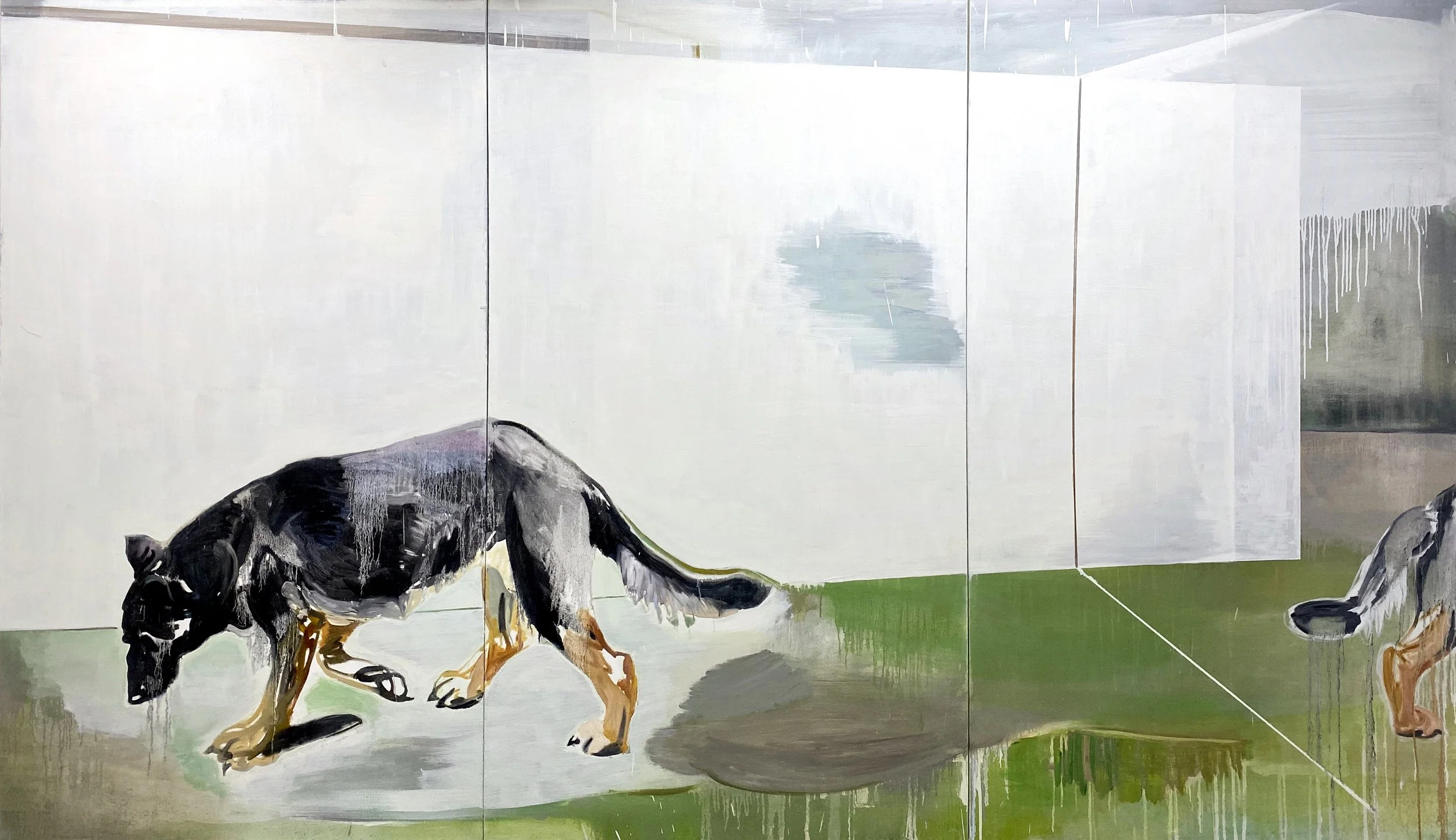
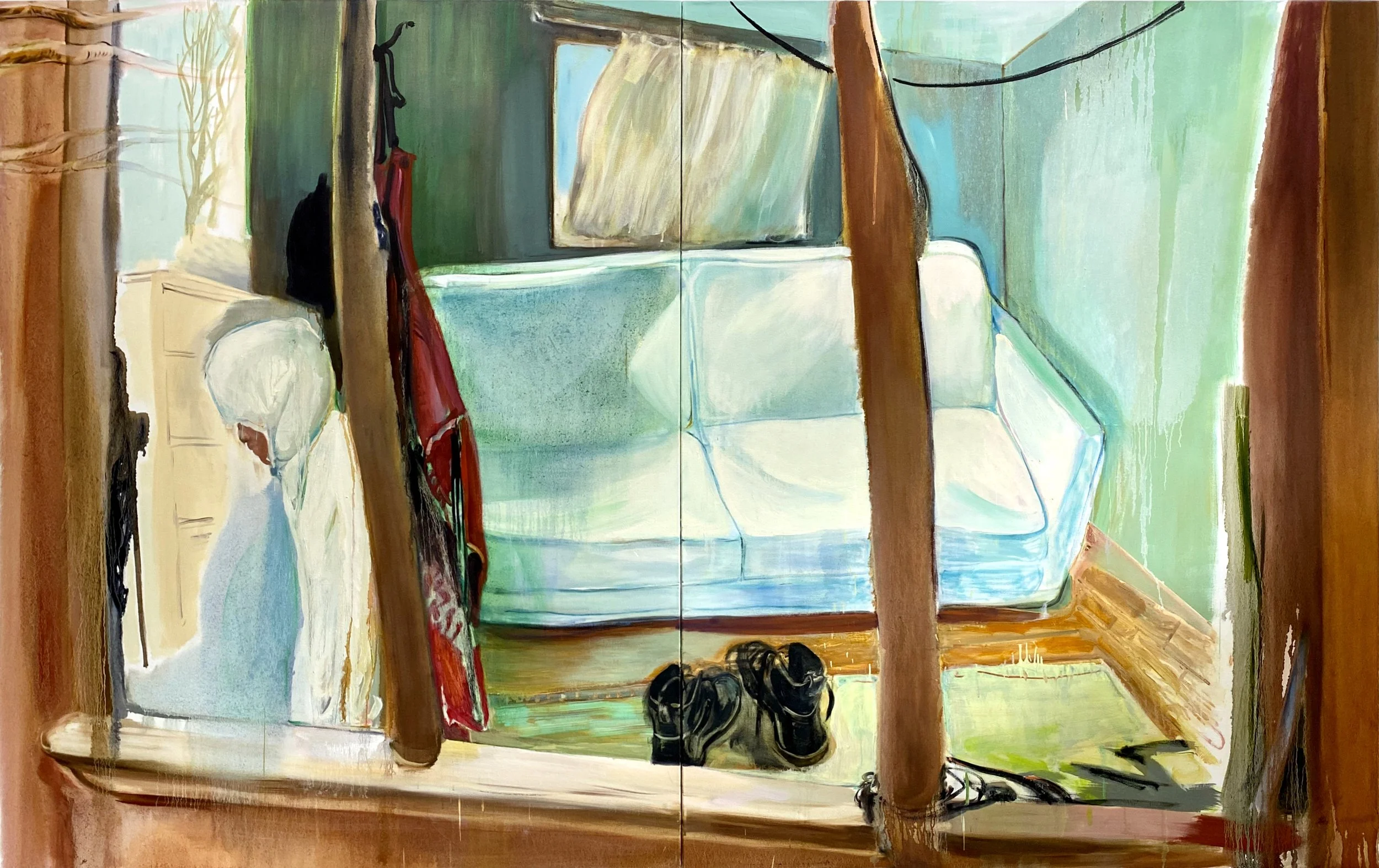
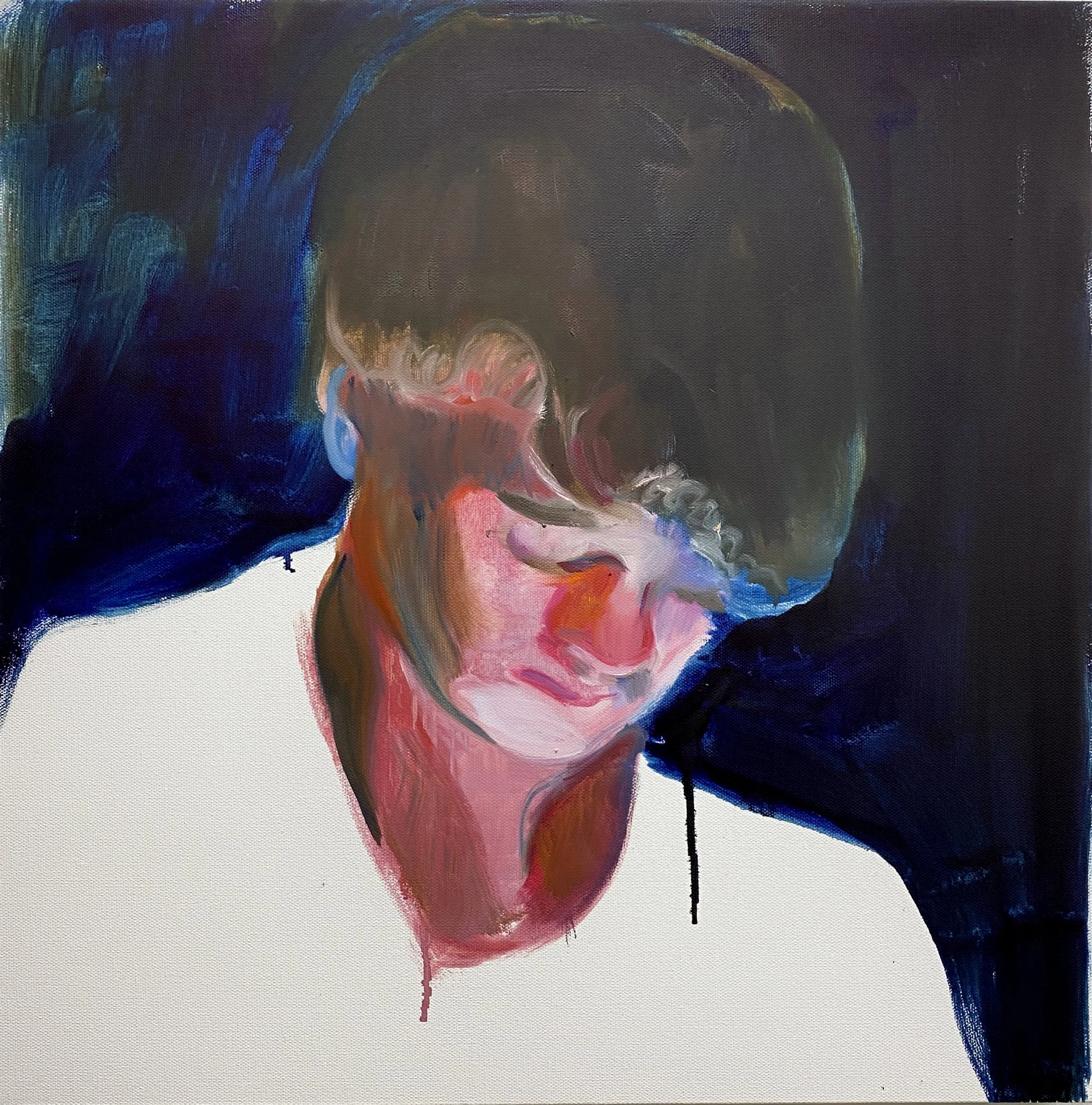
Glosova’s artistic practice began with two-dimensional work, expanded to ceramics (self-taught), and through that she returned to painting and drawing with fresh eyes and hands. Amid these ventures, Glosova added a social element to her practice, turning her own home (showers and all) into a place for other artist’s work to be displayed in open-house events and salons, and letting her evolving understanding of public-vs-private environments inform where she put her attention as an artist.
Her candid portraiture focuses on figures who are unposed, occasionally unpoised. Even in series like her “On the Sidelines” portraits of the backs of parents watching their children play soccer, we feel an intimacy with the faceless, bundled-up stranger, a camaraderie rather than voyeurism.
In works such as “Hunting Blind,” though the figure is absent, there is a human presence that is both idiosyncratic and relatable. Glosova, in her notes for “Every Thousand Years,” reflects on the cave paintings of Lascaux, those enigmatic hunting scenes made from ochre and soot over the course of centuries, ages ago. As remote as that way of life may be, we are reminded that we have always been recording life, communing, making marks and adorning our spaces. Even across that inconceivable scale of time, we remain largely the same creatures as we were in those caves. However, our specific point in history provides an entirely different perspective on our being.
The critical discourse around many well-known contemporary (male) artists who have addressed “the everyday” in their work has largely focused on some sort of detached quality in it: the loneliness of Hopper; the nihilism of Richter; the artificiality of Hockney; the ambiguity of Tuymans. Whether these assessments are definitive or not – and what they might collectively say about the preferences of art academics more broadly – is debatable, but artists and sociologists have been observing the alienating effects of industrial society, even before the hypermediated era in which we now live. We are trained to bring that sensibility to such works. Misery loves company, after all, even if the company exists only in daubs of paint on canvas.
For Glosova, a different word comes to mind: specificity. This is the specificity of the physical reality of the paintings (created with media that resist perfect control), the specificity of the objects and scenes that inspired them (which as ordinary as they might first appear can never be repeated), and the specificity of our own ability to observe, relate and interact with them.
It’s neither the animistic cyclicality of prehistory, nor the spiritual heat death of late modernity. It’s that often ignored middle path of the artist and mystic that reorients us toward curiosity and wonder. It’s the idiom at the heart of the Japanese Tea Ceremony – “Ichigo Ichie,” every encounter is once in a lifetime – reminding us of the specificity of every given moment and inviting us to experience it in its fullness with others.